Showing posts with label Korean grammar dictionary. Show all posts
'푸른 용의 해' 용의 기운 품은 곳으로 떠나볼까? - 5 tourist attractions related to Year of Blue Dragon

'푸른 용의 해' 용의 기운 품은 곳으로 떠나볼까? - 5 tourist attractions related to Year of Blue Dragon

2024년 갑진년은 푸른 용의 해다. 코리아넷은 올해 가보면 좋을 용과 관련된 주요 여행지를 소개한다. 2024 is gabjinnyeon, or the Year of the Blue Dragon under the Asian zodiac. Korea.net recommends visiting this year the following five tourist attractions related to dragons.
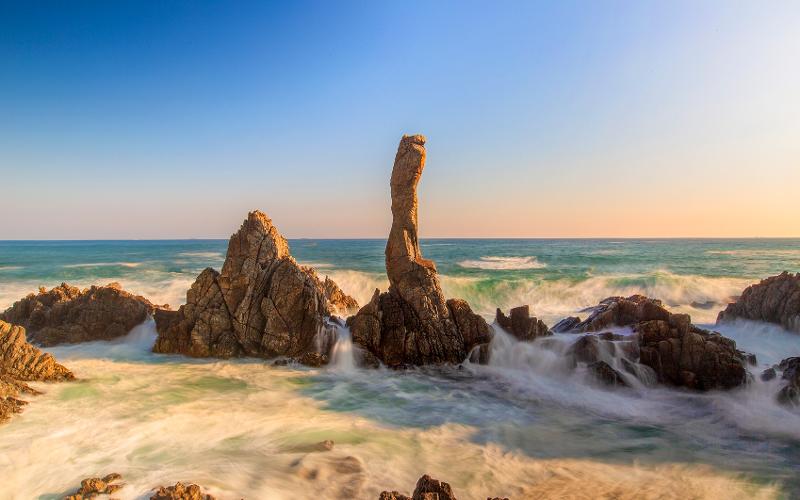
▲ 강원 삼척시 초곡용굴촛대바위길에서 바라본 촛대바위. This is Chuam Chotdaebawi Rock as seen from Chogok Yonggul Chotdae Bawigil Trail in Samcheok, Gangwon-do Province. (Samcheok City Hall's official website - 삼척시 관광 누리집)

아름다운 해변과 일출로 유명한 강원 삼척시에는 초곡용굴촛대바위길이 있다. 촛대바위부터 5분 가량 데크길을 걷다보면 거북바위, 사자바위, 용굴 등 독특한 지형과 해안 절경을 마주할 수 있다. 작은 낚시배가 지나갈 수 있는 용굴은 구렁이가 용으로 승천한 장소라는 전설을 갖고 있는 곳이다.

Samcheok, Gangwon-do Province, a city renowned for its beautiful beaches and sunrise, is home to the Chogok Yonggul Chotdae Bawigil Trail. Walk along the path from Chuam Chotdaebawi (Candlestick) Rock for about five minutes to see the distinctive geographical features of Geobukbawi (Turtle) Rock, Sajabawi (Lion) Rock, and Yonggul (Dragon) Cave and the beautiful coastal scenery. Legend says the cave, where small fishing boats can pass through, is where a big snake transformed into a dragon and ascended to heaven.
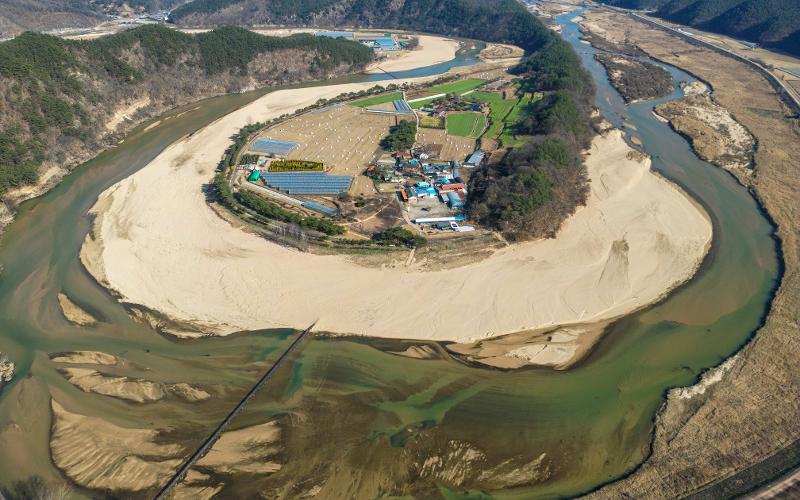
▲ 경북 예천군 비룡산 전망대에서 바라본 회룡포 전경. This view of Hoeryongpo Village is from the observatory on Biryongsan Mountain in Yecheon-gun County, Gyeongsangbuk-do Province. (Korea Tourism Organization - 한국관광공사)

경북 예천군 회룡포는 낙동강 지류인 내성천이 마을을 휘감고 나가는 형상이 마치 용틀임하는 듯해 지어진 지명이다. 고도 240m의 비룡산 전망대에 오르면 육지 속 섬 마을의 모습을 한눈에 담을 수 있다. 주변에 용궁향교, 용궁역테마공원, 용궁순대 등 용과 관련된 볼거리와 먹거리가 다양하다.

Hoeryongpo Village in Yecheon-gun County, Gyeongsangbuk-do Province, got its name from the shape of the Neseongcheon Stream encircling the village which resembles a dragon twisting and turning. Climb to the observatory on Biryongsan Mountain, whose altitude is 240 m, to see the entire island village on land at a glance.

Near the mountain are many things to see and eat related to dragons including Yonggunghyanggyo (Dragon Palace Hyanggyo), with a hyanggyo being a government-run Confucian school in the provinces during the Goryeo and Joseon dynasties. Yonggung Station Theme Park and Yonggung sundae (blood sausage) are other highlights of this area.

▲ 부산 기장군에 위치한 해동용궁사 전경. Haedong Yonggungsa Temple in Busan's Gijang-gun County is located by the sea. (Korea Tourism Organization - 한국관광공사)

부산 기장군 해동용궁사는 용과 관련된 대표적인 사찰이다. 해동용궁사는 1376년 창건된 뒤 임진왜란 때 소실됐다가 1930년대 초 보문사로 다시 지어졌다. 이후 1970년대 초 백의관음이 용을 타고 승천하는 꿈을 꾼 주지 정암스님이 해동용궁사로 이름을 개칭했다. 대웅전 바로 앞에 자리잡고 있는 진신사리탑이 위치한 곳은 용의 머리 형상을 해 용두암이라 불린다. 이밖에도 해돋이 명소로 꼽히는 제룡단 방생터, 다리 아래로 동전을 던져 소원을 비는 용문교 등 볼거리가 많다.

Haedong Yonggungsa Temple in Busan's Gijang-gun County is a leading example of a dragon-related temple. It was founded in 1376, burned down during the Imjin War when Japan invaded Korea from 1592-98, and rebuilt in the 1930s as Bomunsa Temple.

The temple got its present name in the early 1970s when the abbot Jeongam decided to rename it after he saw in a dream a white-robed Gwaneum, aka Avalokiteshvara or the Bodhisattva (enlightened being) of Compassion, riding on a dragon and ascending to heaven.

V/A+ 을/ㄹ 때가 되었다

V/A+ 을/ㄹ 때가 되었다

V/A+ 을/ㄹ 때가 되었다

It is used to indicate that there is sufficient time for a certain action or situation to occur.

If the stem of an action verb or a descriptive verb ends with a vowel or 'ㄹ', you use '-ㄹ 때가 되었다', with another consonant, you use '-을 때가 되었다'.

너도 이제 어른이 되었으니 너의 행동에 책임을 질 때가 되었다.
Now that you're an adult, it's time to take responsibility for your actions.

우리가 아침을 먹은 지 4시간쯤 지났으니까 이제 배가 고플 때가 됐어.
It's been about four hours since we had breakfast, so it's time to get hungry.

오랫동안 계획을 세웠으니까 이제 실행에 옮길 때가 됐지요.
Now that we've been planning for a long time, it's time to put it into practice.

V+ 으면/면 V/A+ 을/ㄹ 줄 알았다

V+ 으면/면 V/A+ 을/ㄹ 줄 알았다

V+ 으면/면 V/A+ 을/ㄹ 줄 알았다

It is used when the expectation that the action of the preceding clause would result in the following clause but it's wrong.

For '-으면/면', if the stem of an action verb or a descriptive verb ends with a vowel or 'ㄹ', you use '-면', with another consonant, you use '-으면'.

For '-을/ㄹ 줄 알았다', if the stem of an action verb or a descriptive verb ends with a vowel or 'ㄹ', you use '-ㄹ 줄 알았다', with another consonant, you use '-을 줄 알았다'.

친구에게 이 선물을 주 기뻐할 줄 알았는데 별로 좋아하는 것 같지 않더라고요.
I had thought he'd be happy if I gave this gift to my friend, but he didn't seem to like it very much.

5월이 되 따뜻해질 줄 알았어요. 그런데 아직도 아침저녁으로 쌀쌀하네요.
I thought it would be warm in May. But it's still chilly in the morning and evening.

혼자 살 외로울 줄 알았는데 생각보다 재미있게 잘 살고 있어요.
I thought I'd be lonely if I lived alone, but I'm doing a better job than I thought.

V+ 는다고ㄴ다고 V+ 었았였는데

V+ 는다고ㄴ다고 V+ 었았였는데

V+ 는다고/ㄴ다고 V+ 었/았/였는데

It is used to indicate that the speaker tried to do something, but the results were unclear or not as satisfactory as intended. You should repeat the same verb twice.

For '-는다고/ㄴ다고', if the stem of an action verb ends with a vowel or 'ㄹ', you use '-ㄴ다고', with another consonant you use '-는다고'.

For '-었는데/았는데/였는데', if the stem of an action verb ends with 'ㅏ, ㅗ', you should use '-았는데', with another vowel(ㅏ,ㅜ,ㅡ,ㅣ) you use '-었는데'. If it ends with '하-', you should use '-였는데(했는데)'.

나는 엄마를 열심히 도와 드린다고 도와 드렸는데 도움이 됐을지 모르겠어요.
I helped my mom hard, but I don't know if it was helpful.

저는 방 정리를 한다고 했는데 별로 깨끗해진 것 같지 않아요.
I did clean my room, but it doesn't look very clean.

제가 틀린 곳을 고친다고쳤는데 못 본 것이 있을지도 모르니까 한번 더 확인해 보세요.
I fixed where it was wrong, but there might be something I missed, so please check it out again.

V+ 으면/면 어떡해요?

V+ 으면/면 어떡해요?

V+ 으면/면 어떡해요?

It is used to scold the listener by saying in detail his behavior is wrong. This cannot be used with '-었', '-겠-' or other tense expressions.

If the stem of an action verb ends with a vowel or 'ㄹ', you use '-면'. If it ends with another consonant you use '-으면'.

15분 후에 기차를 타야 하는데 아직도 집에 있으면 어떡해요?
You have a train to catch in 15 minutes and you are still home?

내가 먹을 피자까지 다 먹으면 어떡해?
How could you eat even my share of pizza?

내일이 시험인데 이렇게 놀고만 있으면 어떡하니?
How could you be playing like this when you have a test tomorrow?

과연 V/A+ 을까요/ㄹ까요?

과연 V/A+ 을까요/ㄹ까요?

과연 V/A+ 을까요/ㄹ까요?

It is used to doubt and question the possibility of certain facts or behavior.

If the stem of an action verb or a descriptive verb ends with a vowel or 'ㄹ', you use '-ㄹ까요?', with another consonant you use '-을까요?'.

그 정도 실력으로 그 사람이 과연 시험에 합격할 수 있을까요?
Will he ever pass the exam with that level of skill?

과연 이 사건의 범인이 잡힐까요?
Do you think the suspect in this case will ever be caught?

우주의 비밀을 완벽히 알아낸다는 것이 과연 가능할까?
Would it be really possible to find out the secrets of the universe completely?

V/A+ 으면/면 V+ 을/ㄹ 수 있다

V/A+ 으면/면 V+ 을/ㄹ 수 있다

V/A+ 으면/면 V+ 을/ㄹ 수 있다

It indicates that something is likely to happen in the following clause depending on the conditions or assumptions that the preceding clause indicates.

For '-으면/면, if the stem of an action verb or a descriptive verb ends with a vowel or 'ㄹ', you use '면', with another consonant you use '-으면'.

For '-을/ㄹ 수 있다', if the stem of an action verb ends with a vowel or 'ㄹ', you use '-ㄹ 수 있다', with another consonant you use '-을 수 있다'.

급하게 서두르 자기도 모르게 실수할 수 있다.
If you hurry, you can make a mistake without noticing it.

유통기한이 지난 음식을 먹으면 배탈이 날 수 있다.
Eating out-of-date foods can cause stomach problems.

날씨가 나쁘 사람들이 많이 안 올 수도 있어. 그러니까 도시락은 적당히 준비하자.
If the weather is bad, there may not be many people coming. So let's prepare a proper lunch box.

V+ 으러/러 가는데

V+ 으러/러 가는데

V+ 으러/러 가는데

It is used to ask a question or to propose to the listener while mentioning the purpose of the speaker moving to his destination in the preceding clause.

For '-으러/러 가는데', if the stem of an action verb ends with a vowel or 'ㄹ', you use '-러 가는데',w with another consonant you use '-으러 가는데'.

나 지금 도서관에 책 빌리러 가는데 같이 갈래?듣기
I'm going to the library to borrow a book. Do you want to go with me?

나 이번에 미국에 처음 놀러 가는데 어디에 가면 좋을까?듣기
This is my first trip to America. Where should I go?

오늘 수업 끝나고 과 친구들하고 농구 보러 가는데 너도 시간되면 같이 가자.듣기
I'm going to play basketball with my classmates after class. If you have time, let's go together.

어떻게 V+ 어/아/여 드릴까요?

어떻게 V+ 어/아/여 드릴까요?

어떻게 V+ 어/아/여 드릴까요?

It is used to politely ask about what the listener wants when the speaker is doing a behavior for the listener. It is often used in a question sentence for offering service.

For '-어/아/여 드릴까요?', if the stem of an action verb ends with 'ㅏ, ㅗ', you should use '-아 드릴까요?', with another vowel(ㅓ, ㅜ, ㅡ, ㅣ) you use '-어 드릴까요?'. If it ends with '하-', you should use '-여 드릴까요(해 드릴까요?'.

앞머리는 어떻게 해 드릴까요? 짧게 잘라 드릴까요?
How would you like your bangs? Do you want me to cut it short?

다 쓴 통장은 어떻게 처리해 드릴까요? 여기 은행에서 폐기해 드릴 수 있습니다.
How would you like your used bank account processed? We can dispose of it here at the bank.

케이크는 어떻게 만들어 드릴까요? 원하는 디자인을 말씀해 주세요.
How would you like your cake made? Tell me the design you want.

V+ 는 대로 V+ 을게요/ㄹ게요.

V+ 는 대로 V+ 을게요/ㄹ게요.

V+ 는 대로 V+ 을게요/ㄹ게요.

It is used when the speaker expresses or promises to do something immediately after a task or situation.'-는 대로' is attached to the stem of an action verb.

For '-을게요/ㄹ게요', if the stem of an action verb ends with a vowel or 'ㄹ', you use '-ㄹ게요', if it ends with another consonant, you use '-을게요'.

노트북 수리가 완료되는 대로 문자 메시지를 보내 드릴게요.
I'll send you a text message as soon as the laptop is repaired.

유양 씨를 찾는 대로 네가 기다리고 있다고 말할게.
I'll tell him you're waiting as soon as I find Yooyang.

사람들이 도착하는 대로 회의를 시작할게요.
Let's start the meeting as soon as people arrive.

V/A+ 으니까/니까 V/A+ 더라.

V/A+ 으니까/니까 V/A+ 더라.

V/A+ 으니까/니까 V/A+ 더라.

It is used to deliver new facts that the speaker came to know as a result of what he has seen or experienced in the past. It is not used in conversations with superiors because it is used only in non-honorific language.

For '-으니까/니까', if the stem of an action verb or a descriptive verb ends with a vowel or 'ㄹ', you should '-으니까', with another consonant, you should use '-니까'.
'-더라' is used attached to the stem of an action verb or a descriptive verb.

양이 적어서 배가 찰까 싶었는데 먹고 나니까 배는 부르더라.
I doubted I would be full because of the small amount, but after eating, I felt full.

문제가 어려우니까 시간 내에 못 푸는 학생이 많더라.
There are a lot of students who can't solve the problem in time because the question is so difficult.

아기가 혼자서는 잘 못 걷는데 손을 잡아주니까 잘 걷더라.
The baby couldn't walk by himself, but he walked well after I held his hand.

V/A+ 는다고/ㄴ다고/다고 하니까 V+ 을게요/ㄹ게요.

V/A+ 는다고/ㄴ다고/다고 하니까 V+ 을게요/ㄹ게요.

V/A+ 는다고/ㄴ다고/다고 하니까 V+ 을게요/ㄹ게요.

It is used when the speaker expresses or promises his will to do something, citing what he has heard from others as a reason.

For '-는다고/ㄴ다고/다고 하니까', if the stem of an action verb ends with a vowel or 'ㄹ', you use 'ㄴ다고 하니까', with another consonant you use '-는다고 하니까'. After the stem of a descriptive verb, you use '-다고 하니까'.

For '-을게요/ㄹ게요', if the stem of an action verb ends with a vowel or 'ㄹ', you use -ㄹ게요', with another consonant, you should use '- 을게요'.

유양 씨가 다리가 아파서 못 한다고 하니까 제가 대신 할게요.
Yooyang said she couldn't do it because her legs hurt, so I'll do it for her.

회의가 조금 있으면 끝난다고 하니까 끝나자마자 빨리 갈게요.
They said the meeting will be over soon, so I'll be there as soon as I'm done.

준수 씨는 요즘 바쁘다고 하니까 전화 대신 이메일을 보낼게요.
Junsu said he's busy these days, so I'll send you an e-mail instead of calling.

V+ 을/ㄹ 때마다 V/A+ 더라고요.

V+ 을/ㄹ 때마다 V/A+ 더라고요.

V+ 을/ㄹ 때마다 V/A+ 더라고요.

It is used to tell the listener what the speaker has learned from repeated experiences.

For '-을/ㄹ 때마다', if the stem of an action verb ends with a vowel or 'ㄹ', you use '-ㄹ 때마다', with another consonant, you should use '-을 때마다'.

'-더라고요' is used attached to the stem of an action verb or a descriptive verb.

이 길은 다닐 때마다 막히더라고요.
This road gets congested every time I go.

내 동생은 식사를 할 때마다 식탁에 음식을 흘리더라고요.
My brother spills food on the table every time he eats.

명동은 갈 때마다 복잡하더라고요.
Every time I went to Myeong-dong, it was complicated.

V+ 어/아/여 주셨으면 좋겠다

V+ 어/아/여 주셨으면 좋겠다

V+ 어/아/여 주셨으면 좋겠다

It is attached to the stem of an action verb to politely ask for what the speaker wants.

If the stem of an action verb ends with 'ㅏ,ㅗ' you should use '-아 주셨으면 좋겠다', with another vowel(ㅓ,ㅜ,ㅡ,ㅣ) you use '-어 주셨으면 좋겠다'. If it ends with '하-', you should use '-여(해) 주셨으면 좋겠다'.

수업을 시작하기 전에 교실을 청소해 주셨으면 좋겠습니다.
I'd like you to clean the classroom before you start the class.

옷이 좀 작은데 한 치수 큰 것으로 주시면 좋겠어요.
My clothes are a little small, so I'd like you to give me a larger one.

음식이 너무 매운데 물을 좀 더 넣어 주시면 좋겠어요.
The food is too hot, so I'd like you to pour some more water.

V/A+ 을/ㄹ 줄 알았어요.

V/A+ 을/ㄹ 줄 알았어요.

V/A+ 을/ㄹ 줄 알았어요.

It is attached to the stem of an action verb or a descriptive verb to indicate that the speaker had already expected the content before he heard the other person or before the event occurred.

If the stem of an action verb or a descriptive verb ends with a vowel or 'ㄹ', you use '-ㄹ 줄 알았어', with a consonant, you use '-을 줄 알았어'.

가: 어제 논문 예비 심사 때 선후배들이 너무 많이 온 거 아니에요?
Didn't there be too many seniors at the preliminary screening of the thesis yesterday?
나: 저는 많이 올 줄 알았어요. 전에 선배들한테서 들었거든요.
I knew there would have been a lot of people. I had heard it from my seniors before.

가: 드디어 내가 쓴 글을 출판하게 되었어!
Finally, I've got to publish my writing!
나: 축하해! 해낼 줄 알았어.
Congratulations! I knew you'd make it.

가: 어서 들어와. 나 요즘 사무실에서 살다시피 하고 있다.
Come on in. I've been living in the office lately.
나: 요즘 한창 바쁘실 때라서 사무실에 계실 줄 알았어요.
I thought you'd be in the office because you've been busy lately.

V/A+ 는데/은데/ㄴ데 당연히 V/A+ 었지/았지/였지.

V/A+ 는데/은데/ㄴ데 당연히 V/A+ 었지/았지/였지.

V/A+ 는데/은데/ㄴ데 당연히 V/A+ 었지/았지/였지.

It indicates that the content of a following clause is inevitable in the situation of a preceding clause. It is used to respond to the listener's question about what the speaker has experienced or done already.

For an action verb you use '-는데/은데/ㄴ데', after the stem of '있다' and '없다' you use '-는데'. After the stem of a descriptive verb that ends with 'ㄹ,' you use '-ㄴ데'. If the stem of a descriptive verb ends with another consonant, you use '-은데'.

For '-었지/았지/였지', if the stem of an action verb or a descriptive verb ends with 'ㅏ,ㅗ', you use '-았지', with other vowels (ㅓ,ㅜ,ㅡ,ㅣ) you use '-었지'. If it ends with '하-', you use '였지(했지)'.

가: 주말에 뭐 했어?
What did you do during the weekend?
나: 월요일에 시험 보는데 당연히 공부했지.
Of course I studied. I have a test on Monday.

가: 점심 먹었어?
Did you have lunch?
나: 시간이 몇 시인데 당연히었지.
It's already after the proper time, of course, I ate it.

가: 방학동안 스웨덴에 갔었다면서? 춥지 않았어?
I heard you went to Sweden during the vacation. Wasn't it cold?
나: 겨울인데 당연히웠지. 요즘이 제일 추울 때잖아.
Of course it was cold in winter. It's the coldest time these days.

V/A+ (으)라는 말도 있잖아요.

V/A+ (으)라는 말도 있잖아요.

V/A+ (으)라는 말도 있잖아요.

It is used to quote something that the listener may already know. It is often used when you propose a behavior to the listener.

If the stem of an action verb or a descriptive verb ends with a vowel or 'ㄹ', you use '-라는'. If it ends with a consonant, you use '-으라는'.

급할수록 돌아가라는 말도 있잖아요.
There's a saying that the more urgent you are, the more you need to go around.

돌다리도 두들겨 보고 건너라는 말도 있잖아요.
There's a saying that you should beat a stone bridge before crossing it.

로마에 가면 로마법을 따르라는 말도 있잖아요.
There's a saying that when you go to Rome, you have to follow Roman law.

V+ 는다/ㄴ다 V+ 는다/ㄴ다 하는 게

V+ 는다/ㄴ다 V+ 는다/ㄴ다 하는 게

V+ 는다/ㄴ다 V+ 는다/ㄴ다 하는 게

It is attached to the stem of an action verb to indicate that one had a persistent desire to do a behavior that cannot be done, actually.

If the stem of an action verb ends with a vowel or 'ㄹ', you should use '-ㄴ다 -ㄴ다 하는 게', with another consonant, you use '-는다 '-는다 하는 게'.

선물 받은 책을 읽는다는다 하는 게 바빠서 아직 못 읽었어요.
I kept trying to read the book you gave as a gift, but I haven't read the book yet because I was too busy.

부모님께 전화를 드린다린다 하는 게 아직도 못 드렸어.
I kept trying to give a call to my parents but I haven't yet.

방 정리를 한다 한다 하는 게 시간이 없어서 아직 못 했어요.
I kept thinking of cleaning my room but I haven't yet because I had no time.

V/A+ 으면/면 V/A+ 는다고/ㄴ다고/다고 말을 했어야지요.

V/A+ 으면/면 V/A+ 는다고/ㄴ다고/다고 말을 했어야지요.

V/A+ 으면/면 V/A+ 는다고/ㄴ다고/다고 말을 했어야지요.

It is used to blame or to express sadness to the listener for not telling a fact. By repeating the verb twice, the speaker emphasizes his feelings.

For '-으면/면', if the stem of an action verb or a descriptive verb ends with 'ㄹ', you use '-면', with another consonant, you use '-으면'.

For '-는다고/ㄴ다고/다고', if the stem of an action verb ends with a consonant, you should use '-는다고', with a vowel you use '-ㄴ다고'. After the stem of a descriptive verb you use '-다고'.

오늘 회의가 있으면다고 말을 했어야지요. 회의가 없는 줄 알고 자료 준비를 안 했는데.
You should have told me that we have a meeting today. I didn't prepare the data because I thought there was no meeting.

밥을 먹고 오 먹고 온다고 말을 했어야지. 음식을 괜히 많이 준비했네.
You should've told me that you would have had your meal. I've prepared that much food for nothing.

머리가 아프 아프다고 엄마한테 말을 했어야지. 왜 얘기를 안 했어?
If you had a headache, you should have told your mom. Why didn't you tell her?

V/A+ 는/은/ㄴ 줄 알고 V+ 었다/았다/였다.

V/A+ 는/은/ㄴ 줄 알고 V+ 었다/았다/였다.

V/A+ 는/은/ㄴ 줄 알고 V+ 었다/았다/였다.

It is used when the speaker finds out that he is ignorant of certain facts and has misbehaved. The speaker's misconception comes in the preceding clause, and in the following clause, you include the behavior due to the misconception.

For '-는/은/ㄴ 줄 알고', after the stem of an action verb or '있다', '없다', you use '-는 줄 알고'.

For the stem of a descriptive verb with a final consonant you use '-은 줄 알고', for one with no final consonant you use '-ㄴ 줄 알고'.

For '-었다/았다/였다', if the stem of an action verb ends with 'ㅏ,ㅗ' you use '-았다', with another vowel(ㅓ,ㅜ,ㅡ,ㅣ) you use '-었다'. If it ends with '하-' you use '-였다(했다)'.

가: 오늘 저녁에 뭐 먹으러 가지? 횟집에 갈까?
what do you want to eat this evening? Shall we go to the sashimi restaurant?
나: 횟집? 난 네가 회를 싫어하는 줄 알고 고깃집을 예약해 뒀는데?
Sashimi restaurant? I thought you didn't like raw fish, so I booked a BBQ restaurant.

벌써 나갈 시간이 됐다고요? 전 아직 시간이 많은 줄 알고 늦장을 부렸는데...
Is it already time to go out? I thought I still had a lot of time, so I dawdled.

읽기 시험은 오늘인데 저는 내일인 줄 알고 공부를 안 했어요.
The reading test is today, but I didn't study because I thought it was tomorrow.